
Trading both debt and equity means you’re juggling two types of investments. They can both come from the same company, and sometimes they’ll move together when big news hits. But just as often, they’ll go their own way. If you’ve got the basics down, you’re usually looking to take advantage of price differences, protect yourself from big swings, or make a bet on which way the market’s headed—choosing whichever market gives you the best odds and execution.
This article breaks down what debt and equity securities actually are when you trade them, how their prices are set, the strategies that connect both markets, and what you need to get started. Picking the right broker is especially important, since trading stocks and trading bonds can feel like two separate worlds, different access, different ways to get your trade filled, and even different rules for settling up. You’ll get straight facts her,no hype, no hard sell.
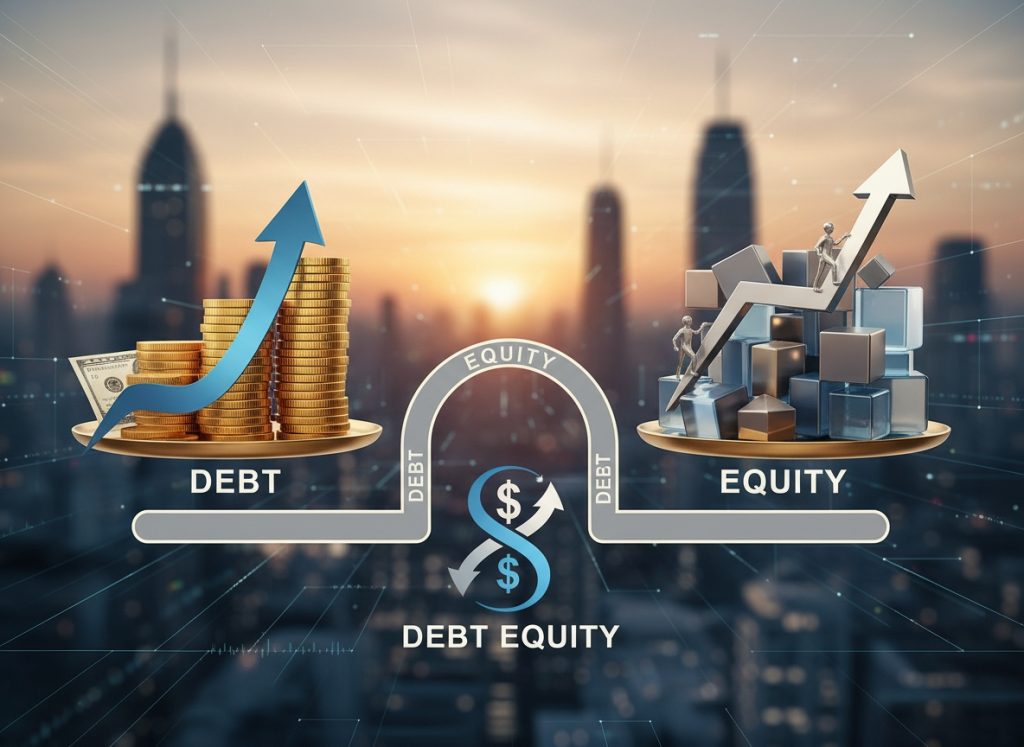
What we mean by debt and equity securities and why traders pair them
Debt securities are contractual claims that promise scheduled payments of interest and principal. Common forms are corporate bonds, government bonds, municipal bonds and securitized debt. Equity securities represent residual claims on a firm’s earnings and assets after debt holders are paid. Common stock and preferred stock are the usual instruments.
Although both map to the same issuer, they are technically and legally different. Debt holders have a senior claim on cash flows and security in bankruptcy in certain cases. Equity holders have voting rights and are last in line on liquidation. These differences produce distinct risk exposures. Debt returns are driven primarily by interest rates, credit spreads and expected recovery rates. Equity returns are driven by earnings, growth expectations, governance and leverage.
Traders pair debt and equity for several reasons. Relative value opportunities arise when the implied credit risk in bond spreads does not match equity implied risk as reflected in option markets or equity prices. Capital structure arbitrage exploits mispricing across bonds, preferreds and common equity. Distressed trading strategies use bond prices to anticipate equity outcomes when default is possible. Hedged equity strategies use credit instruments to reduce downside while keeping upside exposure in equity. In each approach the trader benefits from understanding both instruments — how they trade, what moves them, and how one can hedge exposure in the other.
In real trading, you need to know your stuff: on the debt side, that means understanding how yields and spreads work; on the equity side, you’ll want to get a grip on things like implied volatility and how easy it is to get in and out of trades. Each market comes with its own quirks around liquidity, how much info is out there, and when you can actually trade, which all affects how you manage your trades and the risks you take.
Valuation mechanics that matter to traders
Trading debt and equity requires mastering different valuation frameworks and then knowing how they interact.
On the debt side the core metrics are yield and spread. Yield to maturity is a cash flow discount measure that assumes the bond trades to maturity with scheduled coupon and principal payments. In practice traders also look at yield to worst because callable bonds can be redeemed early. Spread is the incremental yield over a risk free benchmark that compensates investors for credit risk and liquidity. For corporate bonds that benchmark is commonly government securities of comparable duration.
Duration measures interest rate sensitivity. A bond with longer duration will lose more in price when rates rise. Duration is approximate and assumes parallel shifts in the yield curve. For fixed income traders, convexity, the second order sensitivity, matters, especially for large moves or when hedging with futures.
Credit risk boils down to two things: how likely a company is to default, and how much you might get back if it does. Prices jump around as people change their minds about a company’s profits, debt load, or chances of rolling over old loans. What the rating agencies say, the fine print in loan agreements, and where you sit in the line of creditors all matter when it comes to what you’d recover if things go wrong.For high yield names, liquidity risk can add a large premium to spread; in stressed markets spreads may widen far beyond credit fundamentals due to technical selling.
Mortgage and securitized products add prepayment optionality. That optionality makes MBS behave differently from plain vanilla corporates because prepayments shorten duration when rates fall and lengthen duration when rates rise. Option adjusted spread models try to net out the optionality to provide a spread measure that is comparable across instruments.
On the equity side valuation is less formulaic and more forward looking. Prices reflect expected cash flows, growth rates, discount rates and changes in capital structure. Implied volatility derived from option prices is a traded measure of the market’s expectation of future share price movement. Option Greeks matter when using derivatives to hedge or express views. Delta and vega exposures will drive P&L as price and volatility change.
Correlation between bond and equity moves is not fixed. In mild cyclical stress both can fall as risk premia rise. In idiosyncratic credit events a company’s bonds may price in default while its equity still trades on recovery hopes. Traders looking for arbitrage rely on these non linearities.
Relative valuation requires a common baseline. Traders will convert equity implied volatility and option prices into a risk neutral distribution which can be mapped into a credit view, or they will run expected recovery scenarios from bond prices and see whether equity prices imply inconsistent outcomes. CDS spreads are another input because they give a market implied cost to insure against default. When bond spreads, CDS spreads and equity options do not line up there can be a trade, but execution and funding costs may eliminate theoretical profit.
Trading strategies across debt and equity: relative value, capital structure arbitrage, distressed trading, and hedged equity
There are a few recurring strategies that link debt and equity instruments. Each has a particular set of data needs, execution requirements and risk footprints.
Relative value trades try to capture spread compression or expansion between credit and equity implied measures. One common approach is to buy the underpriced instrument and sell the overpriced one while hedging market exposure. For example if bonds trade rich relative to equity implied stress, a trader might short the bond or buy protection via CDS while buying equity to benefit from a re rating. Success depends on the speed of convergence, financing costs and liquidity to enter and exit positions.
Capital structure arbitrage seeks to exploit mispricing between different tranches. Example: a company issues senior bonds, subordinated notes and common equity. If subordinated debt trades very wide while equity implies relatively low default probability, a trader might buy the subordinated debt and short the equity. Alternatively the trade can be implemented with options to control risk. For these trades careful modeling of recovery rates, legal seniority and covenants is essential.
Distressed trading is more specialized. When default is likely, bond prices will typically trade below par to reflect expected recovery. Equity in deep distress may trade as a long shot claim on potential reorganization value. Traders who specialize here combine credit analysis, bankruptcy law knowledge and liquidity planning. The trade often requires patience and an ability to handle illiquid securities that may need to be held through restructuring.
Hedged equity strategies use debt instruments to protect equity downside without giving up meaningful upside. An example is buying common stock and buying cheap put protection on the stock financed by selling short a correlated credit instrument. Or netting equity position with CDS protection. These strategies require tight execution and funding discipline because the hedge costs accumulate and can erode returns if mismanaged.
Pairs and dispersion trades are also possible. For instance, in a sector where one issuer’s bonds cheapen due to idiosyncratic issues while peers remain stable a trader can buy the cheap bond and short similar credits or their equities to isolate the idiosyncratic component.
Each strategy carries implementation risk. Bond markets are less transparent and more dealer driven than equity markets. That affects pricing, slippage and the ability to scale positions. Derivatives such as CDS and options can provide cleaner exposure but introduce counterparty and collateral needs. Traders must quantify these costs before committing capital.
Selecting a broker for trading both debt and equity
Broker selection is a critical operational decision. A broker that is excellent for cash equities may be inadequate for corporate bonds or structured credit.
Market access is the first requirement. For equity trading nearly all retail brokers provide exchange access and options. For bond trading and complex credit instruments you need a broker with a fixed income platform or access to a dealer network. Institutional desks and electronic bond platforms can source primary and secondary inventory. If you plan to trade CDS or structured credit you will need a broker or an inter dealer broker that provides OTC clearing and standardized documentation.
Execution quality differs by venue. Equities provide displayed liquidity, central limit order books and readily measured execution metrics. Bond trading is mainly dealer traded and often negotiated. Best execution in bonds means finding the dealer willing to offer competitive inventory. Check whether the broker aggregates orders, offers anonymous block trading, or routes to electronic bond platforms. For large size ask about block crossing and dark liquidity options.
Financing and margin terms are a major differentiator. If you will use leverage review margin rates for both equities and derivatives. For credit trades that use repo or securities lending to finance positions confirm repo terms and recall policies. Some bonds are subject to special haircuts during stress. For derivatives such as options, futures and swaps confirm initial margin and variation margin processes and how quickly collateral is called. Understand distributor mark ups for primary bond offerings and retail mark ups on secondary trades.
Clearing and custody matter. For OTC derivatives choose brokers that clear through established clearinghouses. For corporate bond positions ensure the broker uses appropriate custodians and segregates client assets. SIPC like protections do not equal insurance against market loss. For international bond trading check how settlement cycles and cross border custody are handled.
Platform features are practical considerations. Fixed income traders benefit from depth of book data, real time cash bond prices, yield calculators and access to TRACE or similar trade data. For equity derivatives you will want Greeks, scenario analysis and implied volatility surfaces. Ease of order entry, ability to submit negotiated orders and fast customer service for settlement or substitution requests are important.
Costs should be compared on total basis. Low commission equity brokers may not be competitive on bonds because they source inventory with mark ups. For options check per contract fees, exchange fees and clearing fees. For OTC credit trades expect commissions and explicit broker fees. For bonds a seemingly small markup on a large par amount can be material.
Reputation and counterparty strength cannot be ignored. A broker’s capital adequacy and regulatory standing matter when trades are large or when complex clearing is required. Check public regulatory records and seek references if executing large or proprietary strategies.
Finally check reporting and tax support. Bond interest statements, OID calculations and 1099 style reporting for dividends and options can complicate tax reporting. A broker that provides clear, timely reporting and has an experienced operations desk simplifies year end and reduces risk of costly errors.
The easiest way to compare brokers and make sure that they fulfill all your requirements is to use Broker Listings . BrokerListings.com is a website that is designed to make it as easy as possible to compare brokers with each other. They allow you to see the information of different brokers side-by-side so you can easily compare the two.
Portfolio construction, risk management and operational issues
When combining debt and equity exposures the portfolio manager must think in terms of cross instrument risk and funding. Duration targets for bond allocations and beta targets for equity exposures should be set explicitly. Stress testing is essential; simulate scenarios that include rate shocks, credit spread widening and idiosyncratic issuer events simultaneously.
Liquidity budgeting matters. Some corporate bonds are thin and cannot be sold quickly without moving the market. Use position size limits tied to average daily trading volume or dealer quoted capacity. For illiquid positions maintain a cash buffer to meet margin or collateral calls.
Hedging should account for basis risk. Using index futures to hedge Treasury exposure while holding off benchmark corporate bonds introduces basis that can widen in stress. When hedging credit using CDS be aware of differences in documentation and deliverable obligations.
Operationally maintain clear documentation of trade rationale, expected time horizon and exit triggers. This is particularly important for distressed trades where holding periods can be months. Reconcile broker statements and position records daily to catch settlement failures early.
Risk metrics should include more than VaR. Scenario analysis that incorporates recovery rate uncertainty and potential for sovereign or regulatory intervention often reveals vulnerabilities that historical models miss.
Regulatory, settlement and tax considerations
Regulation and settlement conventions differ across debt and equity markets. Equities clear centrally with well defined T plus settlement cycles. Corporate bond settlement can be negotiated, but standard cycles and electronic clearing exist. For OTC derivatives ensure you understand the mandated clearing requirements and bilateral collateral rules.
Taxation treats coupon interest and dividend differently in many jurisdictions. Interest from corporate bonds is typically ordinary income. Equity dividends may have favorable rates in some systems but can also include return of capital components. Bond trading can involve original issue discount treatment and complex wash sale interactions in taxable accounts. Keep reserves for tax liabilities and consult a tax professional when using derivatives that create synthetic income or losses.
Regulatory reporting rules apply. Large positions in certain instruments may require filings. Short selling regulations, position limits and disclosure regimes vary. For international trading be mindful of withholding taxes on interest and dividends and of differing reporting requirements.